What Houston Barbershops and Salons Need from a Website
Most barbershop and salon sites lose bookings in the first five seconds. Here is what actually converts: booking above the fold, real photos, prices, and
By Suhaib Chaudhry
A client is standing outside her old salon on Yale Street, phone in hand, trying to decide if the place two blocks down is any good and whether they can even take her today. She pulls up the website on her phone. If that site does not answer three questions in about four seconds, book it, see it, trust it, she is already scrolling to the next result. Barbershops and salons live and die by this exact moment, over and over, dozens of times a day, mostly on phones, mostly between someone else's haircut.
Booking has to be above the fold, not a mission
If someone has to scroll past a hero photo, a paragraph about your journey into hairdressing, and a carousel of Instagram embeds before finding a Book Now button, you have already lost a chunk of that traffic. The booking link, whether it is Square, Vagaro, Booksy, or Fresha, needs to sit at the top of the page and repeat again after the service menu and after the gallery. On mobile specifically, that means a sticky button or a tap target that is easy to hit with a thumb while someone is standing in a parking lot on Washington Ave. We have watched heatmaps on salon sites where over 70 percent of taps in the first ten seconds are aimed at anything that looks like it might start a booking flow. Give people what they are reaching for.
Real photos beat pretty stock photos every time
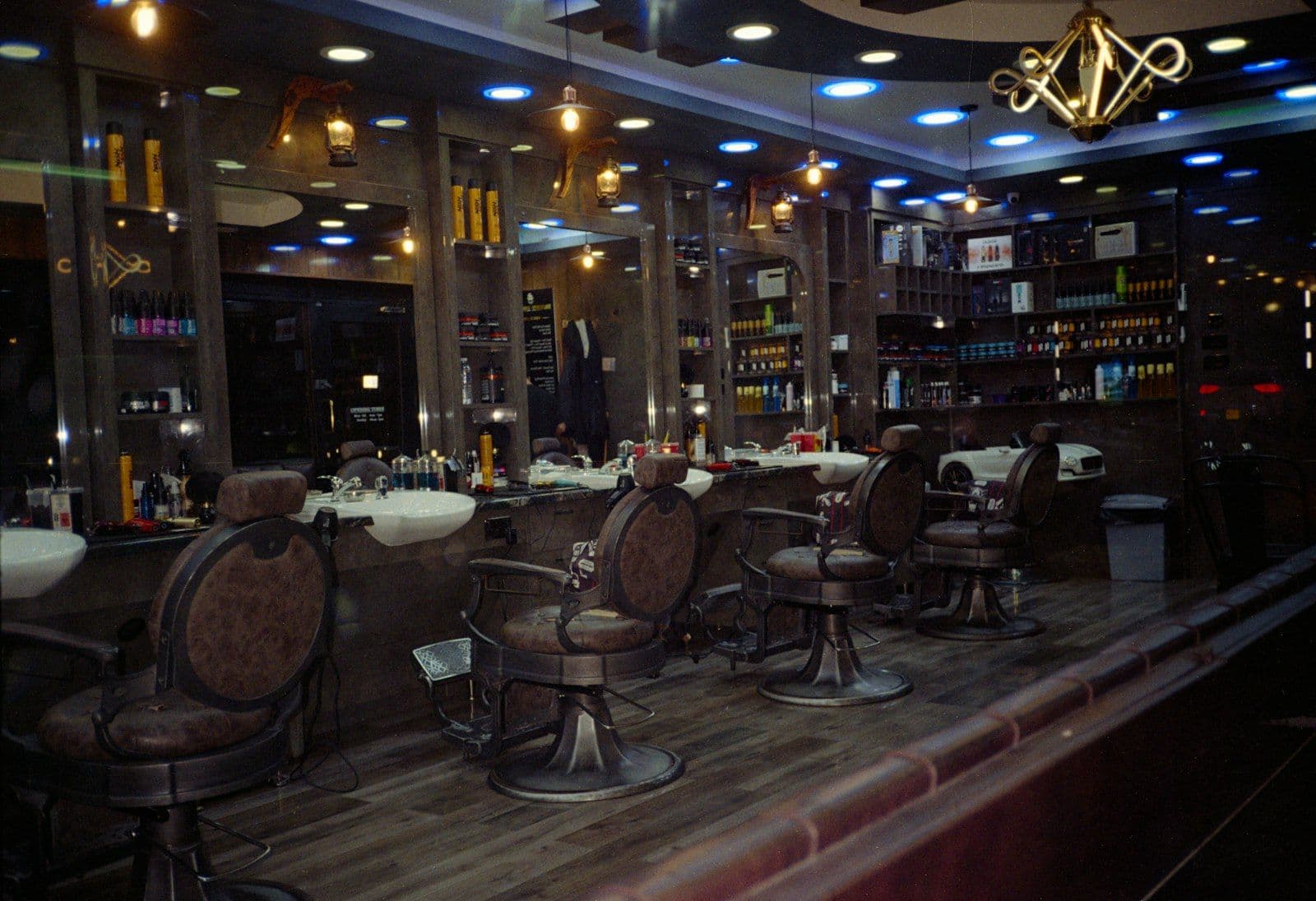
Stock photography is the fastest way to signal to a potential client that they have no idea what they will actually look like walking out of your chair. A fade from a barber in Denver does not tell a Heights client anything useful. What converts is your actual work: last week's skin fade, a balayage done on a real client under your real lighting, the actual chairs and the actual front door so people recognize the building when they pull up. Phone photos are fine if they are well lit and consistent, a ring light bought for forty dollars will do more for your booking rate than a professional photographer who shoots once a year. Update the gallery monthly. A gallery that has not changed since 2022 reads as a shop that has not changed since 2022.
A service menu with real prices, not a call to inquire
"Call for pricing" is a conversion killer. People comparing three shops on their phone during a lunch break will not call three shops, they will book the one that just tells them. List the actual services with actual price ranges: haircut $35, beard trim $15, kids cut $25, balayage starting at $150. If pricing genuinely varies by hair length or stylist level, say that plainly and give a floor and a ceiling. Barbers in particular underrate this. A men's grooming shop in EaDo that lists a straight razor lineup at $40 will out-book a nicer shop three blocks away that makes people call to find out.
- Booking link visible without scrolling, repeated at least twice on the page
- Service menu with prices, updated whenever prices change, not left over from a 2021 rebrand
- Hours that match Google Business Profile exactly, including holiday closures
- Gallery of real client work, refreshed monthly, no stock photography
- Address and parking notes, since Heights and Montrose street parking trips people up
Hours that are never wrong
Nothing burns trust faster than driving to a shop that the website says is open, only to find a handwritten sign on the door. This happens constantly because owners update Google Business Profile after a schedule change and forget the website, or update the website and forget Google, or forget both around Thanksgiving and Christmas. Pick one source of truth. If your booking software also displays hours, make sure all three, website, Google, and booking tool, say the same thing. A five-minute check once a month prevents the single worst first impression a local business can make.
Mobile-first is not optional, it is the default
Barbershop and salon traffic skews heavily mobile, often above 80 percent, because bookings happen in the gaps: between clients, in the car, on a break. That means the desktop version of the site is basically irrelevant. Test everything on a phone first. Can someone book with one thumb while holding a coffee. Does the phone number actually dial when tapped. Does the map open directly in Google Maps or Apple Maps instead of some embedded widget that is slow to load. Page speed matters more here than almost any other business type we build for, because a slow-loading gallery on a spotty 4G connection outside a shop on 19th Street is the difference between a booked chair and a missed one.
A barbershop website is not a portfolio piece, it is a booking machine that happens to have some nice photos in it.
The phone still rings, and someone has to answer it
Even with online booking front and center, plenty of clients still call, especially older clients or first-timers who want to ask about a specific stylist. If every chair is full and nobody can pick up, that call goes to the next shop on the list. This is where a lot of Houston shops are quietly losing business they never see in any analytics dashboard. It is worth looking at how an answering setup like AI Front Desk handles those calls when your hands are full of someone else's hair, booking the appointment directly instead of sending the caller to voicemail.
None of this requires a total rebuild most of the time. Often it is a booking button moved higher, a gallery swapped for real photos, and a phone number fixed to actually dial. If you want to see what your shop's site could look like with these fixes in place before committing to anything, our free demo site offer builds a working preview using your real information, no obligation attached. And if you are curious what a modern, fast, mobile-first setup looks like structurally, our services page breaks down how we build these for barbershops and salons across Houston.
Tags
- barbershop
- salon
- web design
- Houston